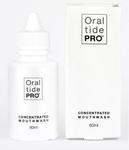
Benefits of OraltidePro™ include:
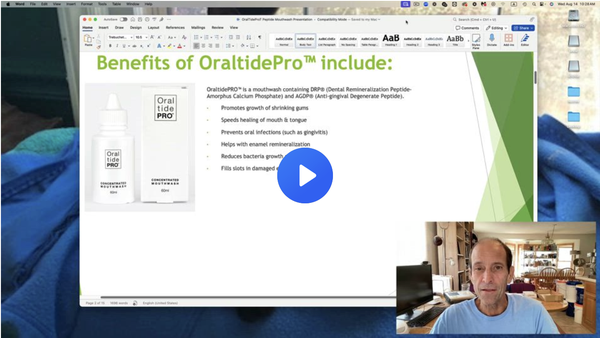
OraltidePRO™ is a mouthwash containing DRP® (Dental Remineralization Peptide- Amorphus Calcium Phosphate) and AGDP® (Anti-gingival Degenerate Peptide).
- Promotes growth of shrinking gums
- Speeds healing of mouth & tongue
- Prevents oral infections (such as gingivitis)
- Helps with enamel remineralization
- Reduces bacteria growth and etching
- Fills slots in damaged enamel
DRP® and AGDP® Peptides
DRP® is obtained using a patented hydrolysis technology that yields a high concentration of the DRP® fragments which is then purified via ultrafiltration membrane technology. A highly negative change of the three serine phosphorylation structures chelates calcium ions to form the soluble DRP® calcium complex. This
helps to contribute to the tooth enamel absorption of the calcium ion and also promotes enamel remineralization. The calcium ion leaves deposits on the damaged enamel, filling in slots, reducing bacterial growth, and preventing etching.
AGDP® is also obtained using the same patented process as DRP®. AGDP® increases synthesis of the type 1 collagen which promotes growth of
shrinking gums, accelerates the healing of mouth and tongue wounds and activates gingival connective tissues and periodontal ligament fibroblasts (the cells that are thought to be responsible for maintaining the tissues.) Additionally, it promotes extracellular matrix (ECM), (molecules that are secreted by cells that provide structure and biochemical support to the surrounding cells).
Dental Bond Peptide-Amorphus Calcium Phosphate (DRP®-ACP)
- DRP® will form the DRP®-ACP complex with calcium and phosphate ion in the weak alkaline environment.
- DRP®-ACP will be adsorbed to the enamel surface to form DRP®-ACP biofilm to modulate the balance of demineralization /
remineralization.
- Inhibition of calcium phosphate precipitation and crystallization, and promote remineralization reaction.
- Reduces the bacterial growth.
- Repairs damaged enamel.
Anti-Gingival Recession Peptide (AGDP®) Characteristics
- AGDP® is a small peptide which can promote fibroblast proliferation collagen and extracellular matrix (ECM), simultaneously supplement the necessary nutrients and activate the growth
factors.
- AGDP® can increase synthesis of type I collagen and extracellular matrix, repairs the fracture and breakage of collagen organization, promote the growth of shrinking gums, accelerate the mouth, tongue wound healing, relieve symptoms of inflammation of the gums by activating gingival connective tissue and periodontal ligament fibroblasts.
Scientific Studies
of AGDP®
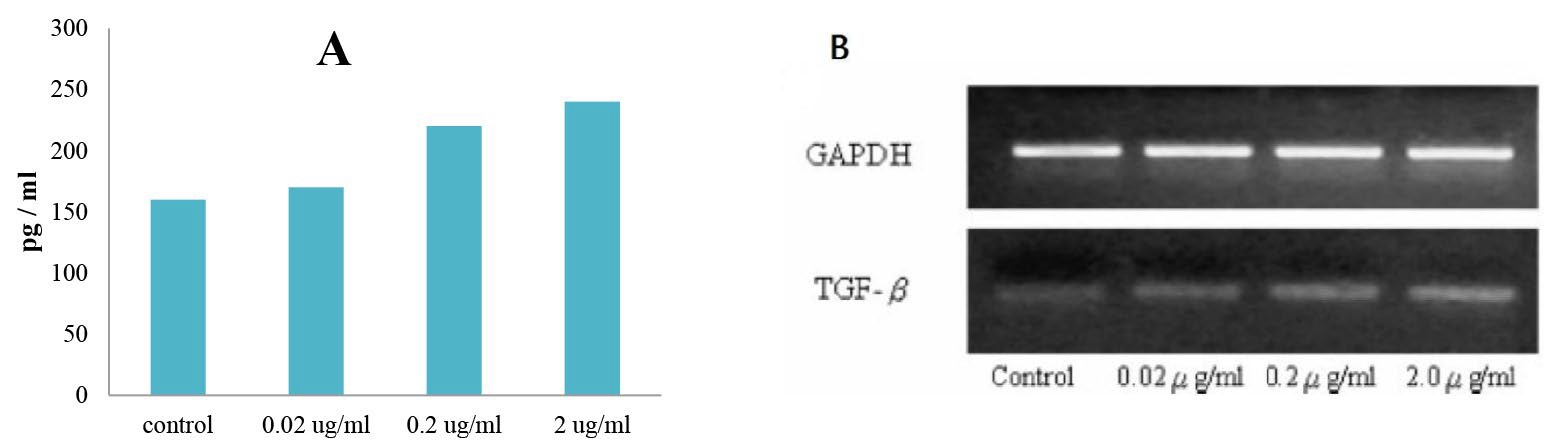
Study I:AGDP® stimulated the gene expression of TGF-β.
Fig 3. (A) The TGF-β concentration of conditioned medium of tendon cells treated with AGDP® increased dose dependently. (B) AGDP®
stimulates the expression of TGF-β at the transcriptional level. The resultant DNA band of TGF-β was identified at the 161-bp position.
The TGF-β concentration of conditioned medium of tendon cells treated with AGDP® increased dose dependently (157.2±4.5 pg/mL for the control group,
and 164.7±6.0 pg/mL, 212.7±2.8 pg/mL, and 240.4±17.4 pg/mL for the cells treated with 0.02, 0.2, and 2.0 μg/mL of AGDP®, respectively (Fig.3A). RT-PCR of TGF-β also revealed gradual increase in TGF-β expression at the mRNA level as a function of AGDP® concentration (Fig.3B).
Scientific Studies
of AGDP®
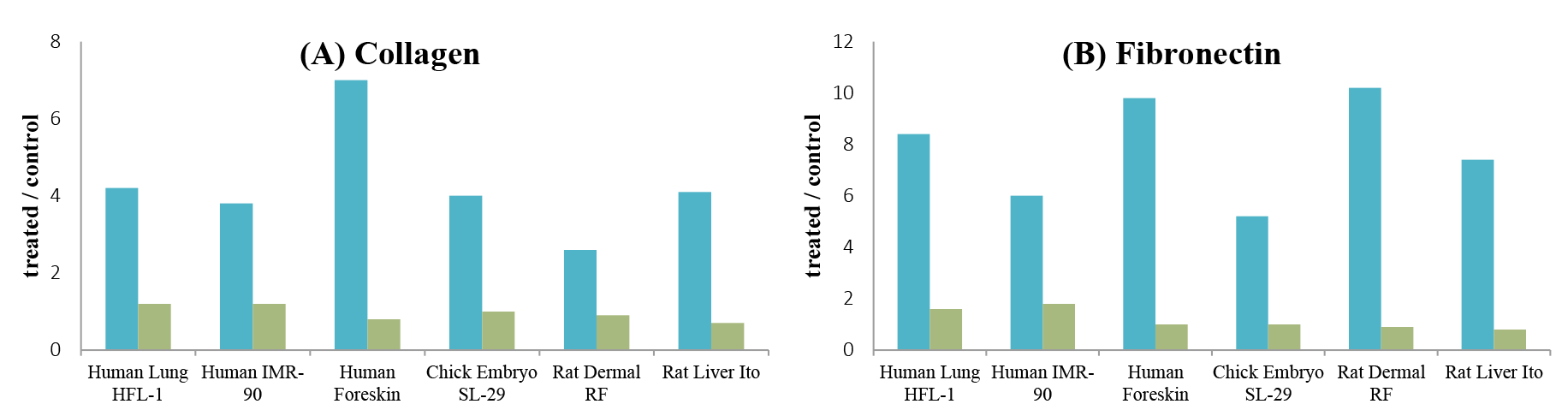
Study II:AGDP® stimulated the biosynthesis of collagen and fibronectin.
Fig. 4. Extracellular matrix stimulatory action of AGDP® occurs in a wide variety of cells and is independent of the state of cellular confluency.
The effect of AGDP® on the
production of extracellularly released procollagen (A) and fibronectin (B) was quantitated. Human lung fibroblasts HFL-1 (12th passage), IMR-90 fibroblasts (12th passage), human foreskin dermal fibroblasts from normal infant foreskin (2nd passage), chick embryo fibroblasts SL-29 (15th passage), rat dermal fibroblasts (12th passage), and rat liver lipocytes (Ito cells, 6th passage) were grown in DMEM with 10% fetal bovine serum. Parallel cultures of subconfluent (■) and confluent (■) fibroblasts
were treated with 50 μM AGDP®. Quantitation of extracellularly released radiolabeled procollagen and fibronectin was accomplished and data are shown as mean ± S.E. derived from three independent experiments. The result is indicated that AGDP® can stimulate production of matrix molecules such as collagen and fibronectin from several fibroblast cell lines of human, mouse, rat, and chicken origin.
Scientific Studies
of AGDP®
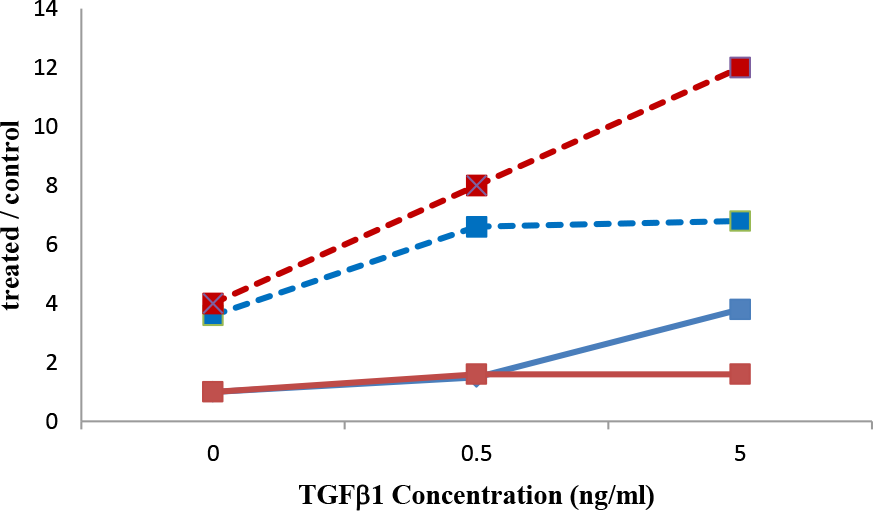
Study III:AGDP® synergized with TGFβ1 up-regulate ECM biosynthesis.