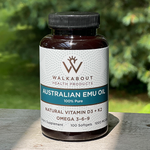
Weston A. Price showed in the 1930’s the cultures adhering to their indigenous diets had wide jawbones, stout constitutions, and strong reproductive powers. He noted that they all consumed foods that had the fat-soluble vitamins A, D and K2 (as MK-4) in them.
Fertility for both men and women has become an increasing problem. Sperm counts have gone down by 1 – 2% per year for decades. Up to 10% of today’s couples cannot conceive a child, even with medical help.
In males the relationship between bones and hormones is a two-way street. Uncarboxylated Osteocalcin, produced by the Skelton’s bone-building osteoblast cells, induces the testes to produce testosterone. This stimulates sperm production and survival, having a
fundamental effect on fertility. Osteocalcin deficient male mice have significantly smaller testes, and decreased sperm counts and display 60 percent to 80 percent lower circulating testosterone levels compared with healthy littermates. Matings between normal female and Osteocalcin deficient male mice produce smaller and less frequent litters than those between typical males and females. Uncarboxylated Osteocalcin binds to testicular Leydig cells, the body’s key testosterone factories. So,
taking vitamins A, D and K2 (as MK-4) can support higher testosterone levels and reviving sperm production.
The Truth about Vitamin
K2
Vitamin K2 MK-4 was Dr. Weston Price's Activator X
The traditional cultures Dr. Price studied only had natural K2 as MK-4 in their diets. Not K2 as MK-7.
MK-4 is the most nutritionally important form of K2
* MK-4 is the only K2 in breast milk
•
MK-4 is the only K2 that crosses the placental barrier
• MK-4 is critical for proper bone, jaw, skull and dental development in utero
• MK-4 is the only K2 in our brains
• MK-4 is required for the production of myelin
• MK-4 helps in maintaining
structure of brain cell membranes
• MK-4 is the highest concentration of K2 in human tissue
• MK-4 is necessary for life
• MK-4 activates VKDP, vitamin K dependent proteins:
VKDP — Vitamin K–Dependent Proteins
Vitamin K–dependent proteins (VKDPs) are a family of proteins
that require vitamin K–driven carboxylation to become biologically active.
These proteins contain specific amino acids called glutamic acid (Glu) residues.
An enzyme called γ-glutamyl carboxylase (GGCX) uses vitamin K (in its reduced form, KH₂) to convert these Glu residues into γ-carboxyglutamic acid (Gla) residues.
This “carboxylation” process activates the protein so it can
bind calcium (Ca²⁺) and perform its physiological role.
• MK-4 activates Matrix GLA Protein -the strongest inhibitor of vascular calcification
• MK-4 activates Osteocalcin or bone protein formation
• MK-4 is the bioactive form on the genetic and metabolic
level
• MK-4 reduces inflammation
• MK-4 maintains the integrity of our skin
• MK-4 is readily absorbed by the body
• Mk4 is a cofactor in cellular production of energy in the electron transport
chain
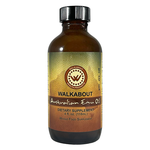
• Mk-4 is in grass fed animals, organs, meats, pastured eggs, butter, butter oil, cheese, the highest source per gram is Walkabout Emu Oil
We are designed to get K2 from animal sourced foods. We do not have an herbivore digestive tract, therefore we cannot extract vitamin K1 from grass and convert it into vitamin K2. The small amount of K2 generated by our fermentative gut bacteria are 100% utilized by the gut
bacteria, in the colon.
Emu Oil is a natural product, the Vitamin A content fluctuates between 1.375 mcg/g and 10 mcg/g. 1 gram is slightly less than a 1/4 tsp of the liquid supplement. However, it is exactly equal to 1 Capsule in our bottle of Emu Oil Capsules.
Trans or CIS has to do with a bond in the molecule. Trans is the form that all natural Vitamin K2 MK-4 is in. Synthetic K2 MK-4 is a mix of CIS and Trans, and the percentages are often random. CIS
will bind to the Vitamin K Dependent Proteins but they will not activate them, only Trans will activate the proteins, so CIS interferes with the proper functioning in the body. Vitamin K2 MK-7 does the same thing as CIS.
In 1/2 tsp of Emu Oil there is 30 mcg of Vitamin K2 MK-4. The Vitamin K2 content is 15 mcg/g, and a gram of Oil is approximately 1/4 tsp or 1 Capsule. Our Vitamin K2 MK-4 content is 15 mcg/g, which is the highest natural source in the world. The total daily
dose would be 90 mcg/day.
Regarding C-15, Emu Oil contains all of your Omega Fatty Acids and they are recorded as percentages. The Fatty Acid C-15 tested at approximately 0.47% for 1 gram of oil, and 1g is slightly less than 1/4 tsp. Research shows that only very minute amounts of C-15 are needed by the body. The Fatty 15 website has loads of information on C-15.
More Value From MK-4
- MK-4 (menaquinone-4) is a
short-chain form of vitamin K₂, distinct from longer-chain menaquinones like MK-7 (found in natto).
- It is not produced by bacteria in food — rather, the body converts vitamin K₁ (phylloquinone) into MK-4 via the enzyme UBIAD1, especially in tissues such as the pancreas, brain, vessel walls, gonads, and bone.
- Because of this, MK-4 functions like a tissue-specific signaling
molecule, beyond its role in clotting.
Key Biological Roles
- Cofactor for γ-carboxylation (Vitamin K–Dependent Proteins, VKDPs)
MK-4 activates several VKDPs, including:- Osteocalcin (BGLAP): binds calcium into bone and also acts as a metabolic hormone.
- Matrix Gla Protein (MGP): prevents calcium from depositing in arteries.
- Gas6 and Protein
S: regulate cell growth, survival, and repair.
- Gene Expression Regulation
MK-4 influences transcription factors such as SXR/PXR (steroid and xenobiotic receptor), modulating genes involved in:- Cholesterol metabolism
- Steroid hormone synthesis
- Cellular differentiation and detoxification pathways
- Mitochondrial Protection
MK-4 acts as an electron carrier and
antioxidant, supporting ATP production and reducing oxidative stress in cells such as neurons and pancreatic β-cells.
Core Health Benefits
Body System | MK-4 Benefit | Mechanism |
Bone | Strengthens bone, reduces fracture risk | Activates osteocalcin → improves
calcium deposition |
Cardiovascular | Prevents arterial calcification | Activates MGP → keeps calcium out of soft tissue |
Brain & Nerves | Neuroprotective, supports myelin and cognition | Antioxidant action, sphingolipid metabolism |
Endocrine/Metabolic | Improves insulin sensitivity, glucose
control | Via osteocalcin activation and antioxidant effects |
Reproductive | Supports steroidogenesis (testosterone, estrogen) | SXR/PXR activation in gonads |
Anti-Inflammatory | Reduces inflammatory cytokines | NF-κB pathway modulation |
Anti-Diabetic and Metabolic Effects
1.
Osteocalcin–Insulin Axis
Activated (carboxylated) osteocalcin, which requires MK-4, acts as a hormone linking bone and energy metabolism.
- Uncarboxylated osteocalcin stimulates:
- β-cell proliferation in the pancreas → more insulin production.
- Adiponectin release from fat cells → increased insulin sensitivity.
- Adequate MK-4 ensures a proper
balance between carboxylated and uncarboxylated osteocalcin for metabolic signaling.
2. Protection of Pancreatic β-Cells
- MK-4 reduces oxidative and ER stress in β-cells.
- Improves glucose-stimulated insulin secretion in cell and animal models.
- Studies show MK-4 supplementation can improve fasting glucose, HbA1c, and HOMA-IR in mild type-2 diabetes.
3. Anti-Inflammatory & Lipid
Effects
- Down-regulates inflammatory mediators (TNF-α, IL-6, CRP).
- Helps lower triglycerides and total cholesterol modestly.
- Enhances mitochondrial function and reduces reactive oxygen species (ROS) in muscle and liver — supporting better glucose utilization.
Evidence Snapshot
Study
Type | Finding |
Human clinical (Japan) | MK-4 (45 mg/day) improved bone density and showed modest improvements in glucose regulation. |
Animal models of diabetes | MK-4 protected β-cells and increased insulin secretion. |
Cell studies | Enhanced mitochondrial function and reduced
oxidative stress in insulin-secreting cells. |
(References: Iwamoto et al., 2006; Tsukamoto et al., 2001; Sakamoto et al., 2012; Takeda et al., 2017.)
Simplified Takeaway
Vitamin K₂ as MK-4 helps the body direct calcium into bones, keep it out of arteries, protect metabolic tissues, and improve insulin sensitivity.
Its metabolic effects
arise from both osteocalcin activation and cellular antioxidant protection, making it a nutrient that links bone, cardiovascular, and glucose metabolism.
Practical Notes
- Typical supplemental dose: 1 – 5 mg/day for maintenance; 45 mg/day is the high-dose used clinically in Japan for osteoporosis.
- Fat-soluble: take with meals containing fat for best
absorption.
- Works synergistically with vitamin D₃ and magnesium, which regulate calcium balance and bone metabolism alongside MK-4.
Vitamin K2 and the Calcium Paradox