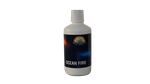
Discover how ocean derived and concentrated Ormus minerals can improve your health.
OCEAN FIRE is a liquid ocean mineral concentrate derived from pristine Pacific seawater. It is processed to retain the ocean's full spectrum of naturally occurring minerals and trace elements—containing over 90 (or
up to 93) elements—while removing approximately 95% of the sodium chloride. This results in a low-sodium product (around 12% of the solids are remaining NaCl) that is rich in ionic minerals, trace elements, and organic substances from seawater, without the high sodium load that would otherwise make direct seawater consumption impractical or risky.
The product is primarily marketed and used as a bio-stimulant and mineral amendment for agriculture, horticulture, and animal
nutrition (e.g., improving crop yield, nutrient density, soil microbial activity, plant stress tolerance, and photosynthesis). However, some folks also consume it internally as a human trace mineral supplement at very low doses (roughly 1/5 to 1/2 teaspoon per 100 lbs. of body weight daily, or about 0.03–0.08 oz per 100 lbs.). It is presented in an ionic/liquid form that proponents claim makes the minerals highly bioavailable as enzyme cofactors and catalysts.
Key
reported or inferred benefits include:
Broad-Spectrum Mineral and Trace Element Replenishment — Modern soils and diets are often depleted in trace minerals (e.g., magnesium, zinc, selenium, boron, iodine, and rarer elements like strontium or vanadium). OCEAN FIRE provides a full array in ionic form minerals, which supports the activation of an estimated 5000 to 75,000 enzymes in the human body. These trace minerals also support electrolyte balance, hormone production, and cellular
function. People report improved overall vitality.
How Trace Elements Relate to Enzymes
Trace elements (especially metals like zinc, iron, copper, manganese, etc.) primarily function as cofactors or integral parts of metalloenzymes — enzymes that require a specific metal ion to work properly. The body does not "create" enzymes from these elements. Instead:
Enzymes are large protein molecules synthesized by the body using amino acids (encoded by
DNA/RNA).
Trace elements are incorporated into or bound to some of these proteins to activate them, stabilize their structure, or participate in catalysis (e.g., electron transfer, hydrolysis).
Not all enzymes need trace elements — many rely on organic cofactors (vitamins) or none at all. Only a subset are metalloenzymes or metal-activated enzymes.
Estimated Numbers of Enzymes Involving Trace Elements
There is no
single, precise total for "enzymes created from" or dependent on all trace elements combined, because:
Zinc alone is a component or cofactor in over 300 enzymes (some sources say 200–300+ for catalytic roles, up to ~3,000 zinc-binding proteins overall, including non-enzyme roles like transcription factors).
Iron is central to hundreds more (e.g., in heme-containing enzymes like cytochromes, catalase, peroxidase).
Copper, manganese, molybdenum,
selenium, etc., each participate in dozens to a few hundred enzymes or related proteins.
Overlaps exist, and many enzymes use multiple metals or cofactors.
Overall estimates for metalloenzymes in the human body (across known trace metals) range in the hundreds to low thousands, but this is a rough extrapolation rather than a firm count. The total number of distinct enzymes (proteins with catalytic activity) in the human body is itself estimated at around 5,000–75,000
depending on definitions (some older popular sources say ~75,000 including variants and isoforms, while stricter biochemical counts are lower).
Key Examples of Trace Element-Dependent Enzymes
Zinc: Carbonic anhydrase, alcohol dehydrogenase, superoxide dismutase (Cu/Zn-SOD), alkaline phosphatase, many DNA/RNA polymerases and proteases.
Iron: Hemoglobin/myoglobin (oxygen transport), cytochromes (electron transport chain),
catalase.
Copper: Cytochrome c oxidase, superoxide dismutase, lysyl oxidase (connective tissue).
Manganese: Mn-superoxide dismutase, arginase, pyruvate carboxylase.
Selenium: Glutathione peroxidases (antioxidant).
Molybdenum: Sulfite oxidase, xanthine oxidase.
Deficiencies in these minerals can impair enzyme activity, leading to health issues (e.g., anemia from iron, impaired immunity/growth from zinc).
Energy, Recovery, and Physical
Performance — Deep ocean mineral studies show that oral supplementation can enhance high-intensity exercise recovery, increase aerobic capacity, support muscle function, and improve cerebral blood flow during physical stress. The magnesium, calcium, potassium, and trace elements in low-sodium seawater concentrates may contribute to better hydration, reduced fatigue, and faster post-exercise recovery. Anecdotal reports from animal studies with similar products mention improved feed
efficiency, lower mortality, and calmer behavior, which some extrapolate to human mood/energy support.
Immune and Anti-Inflammatory Support — Trace minerals act as cofactors for antioxidant enzymes (e.g., selenium for glutathione peroxidase, zinc for immune cells). Related marine mineral research suggests potential reductions in systemic inflammation and better resilience against lifestyle-related issues like cardiovascular strain or metabolic stress. Some
agricultural users note increased disease resistance in plants/animals, leading to claims of indirect immune benefits in humans.
Gut Health and Microbiome Diversity — A study on a similar seaweed/seawater-derived multi-mineral blend (rich in magnesium, calcium, and >70 trace elements) found it significantly increased gut bacterial diversity and short-chain fatty acid production in rats, positioning such products as promising for digestive
health.
Nutrient Utilization and Metabolic Support — The minerals may act as catalysts for better protein synthesis, nitrogen utilization, and overall nutrient absorption—benefits observed in crops and animals. Proponents suggest this could translate to improved energy metabolism, blood sugar regulation, and reduced risk of deficiencies linked to chronic conditions (e.g., magnesium for cardiovascular and metabolic health).
Other
Subjective/Wellness Effects — Because OCEAN FIRE overlaps with ORMUS-style ocean mineral products, some users report enhanced mental clarity, better sleep, or a general sense of well-being. It is sometimes positioned as gentler on the body than high-sodium sea products.
Important Caveats and Scientific Perspective
Safety and Dosage: The low-sodium processing makes it safer than raw seawater for internal use. Follow the recommended
micro-doses to avoid loose stools.
In essence, the value of consuming OCEAN FIRE for humans lies in its role as a convenient, low-sodium, full-spectrum ionic trace mineral concentrate that supports enzymatic function, energy metabolism, recovery, and overall resilience by replenishing the ocean's natural mineral profile. Many enthusiasts use it daily as a "mineral insurance" tonic, particularly those focused on regenerative agriculture or holistic wellness. If you're
considering it, start low, and pair it with a nutrient-dense diet for best results. For personalized advice, speak with a qualified nutritionist or doctor familiar with trace mineral therapy.